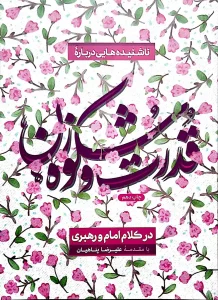
NĀSHENĪDEH-HĀ’Ī DARBĀRE-YE QUDRAT VA SHUKUH-E ZAN DAR KALĀM-E IMĀM VA RAHBARĪ. [UNHEARD PERSPECTIVES ON THE POWER AND GRANDEUR OF WOMEN IN THE WORDS OF IMAM KHOMEINI AND AYATOLLAH KHAMENEI]. By Alireza Panahiyan. Qom, Iran: Bayan-e Ma‘navi. 2018. Pp. 98. Paper. 500,000 IRR
One of the significant and challenging topics is the position of women within the family and society. Women not only constitute half of the population but also play a more effective role in the prosperity of society. Imam Khomeini and Ayatollah Khamenei have, on various occasions, articulated the status of women in such a way that advocates proclaiming to support women’s rights find themselves at a loss in the face of such exaltation.
Numerous works have been written on this subject; however, this particular piece draws from the statements of two pivotal figures in the world of Shia Islam, namely Imam Khomeini and Ayatollah Khamenei.
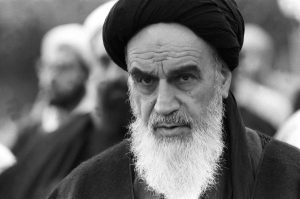
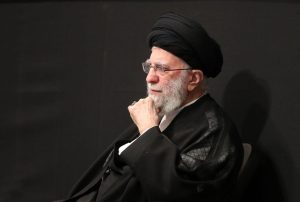
In the first section, it is articulated that mothers are the foundation for the heavenly abode of human beings, and the role of child-rearing is deemed superior to all professions. The influence of a mother is greater than that of a father, teacher, or mentor. If a child emerges positively from the nurturing lap of a mother, who occupies the highest realm of upbringing, this formative experience tends to persist throughout the child’s life, unless countered by exceedingly strong external factors, because the bond a child has with the mother is unparalleled, and the mother’s words etch deep within the child’s mind. Essentially, all of a child’s aspirations are encapsulated in the mother, as they have an affinity for no one else. A child witnesses everything through the prism of the mother; her words, demeanor, and actions significantly affect the child, making mothers primarily accountable for the actions and conduct of their offspring. The honor of motherhood surpasses that of fatherhood, with a mother’s impact on a child’s spirit exceeding that of a father’s. Thus, everyone is influenced by their mothers; those who attain paradise do so through their mothers, which is why it is said that “Heaven lies beneath the feet of mothers.” Furthermore, the author emphasizes that if women are honored within the family environment, a significant portion of societal challenges will be resolved. We must cultivate an environment where children cherish their mothers; Islam advocates for this. Women are the source of all goodness. Women are the educators of humanity. Imam Khomeini articulates that we owe our movement to women, as men only followed suit after women encouraged them to take to the streets during the Iranian Revolution, where women took the lead. Women not only empowered themselves but also empowered men to stand against oppression. Imam Khomeini asserted that the great criminals realized that it is women who can inspire men to rise. The Islamic regard for women is greater than that for men. Leadership has stated that he has often seen mothers of martyrs being stronger than the fathers of those martyrs.
The second section notes that the happiness and misery of countries rest in the hands of women, and it is these women who raise men. A woman is a significant human being and a nurturer of society. The role of women in society surpasses that of men, and the service rendered by mothers to society transcends that of anyone else. Imam Khomeini interestingly remarks that women are the leaders of our movement; we are merely following them, and the integrity or corruption of a community stems from the integrity or corruption of its women. Ayatollah Khamenei states that the key to solving societal issues resides in the hands of women, and hence, it is said that “Paradise lies beneath the feet of mothers.” Women’s roles are the most vital, delicate, enduring, and impactful throughout human history and the journey of humanity toward perfection. Imam Khomeini conveys that the Quran cultivates humanity, and women do the same.
The third section expresses that the lack of maternal love is the root of many societal evils, as children require maternal affection; a child raised in an orphanage may develop emotional burdens. The role of a mother aligns with that of the prophets, that is, nurturing. Women who deprive their children of maternal care for other pursuits act against the best interests of both their children and society, and Islam does not permit this. The author further asserts that the most honorable occupation in the world is motherhood and the upbringing of children, and all societal benefits emerge from the nurturing lap of mothers. Diverting mothers from child-rearing is a grave betrayal to nations. A woman is the essential element of family formation; while a woman can maintain a family without a man, a man cannot do so without a woman. The obligation of work is not an inherent duty of a woman, but a distinction should be made between employment and social activity, which is a shared responsibility between men and women.
Additionally, the text addresses women’s capacity in managing their husbands. For a man, a wife performs a role akin to that of a mother for a child, and at times, a woman can serve as a balm for her husband’s pains. The subsequent section discusses the greater rewards awaiting women compared to men, attributing this to the visibility of men’s work which often garners public admiration, whereas a woman’s efforts at home remain unnoticed. Fatimah Zahra serves as an exemplary model for young women; she was a woman who devoted herself to raising her children while her husband was on the battlefield, embodying the dual role of being both a good mother and wife while participating in social activities. However, traditional employment or retailing is not considered meaningful social activity. Fatimah Zahra epitomizes such a balance. Addressing the injustices faced by women and preventing physical and spiritual abuse against them can only be achieved through the ethics, laws, and moral development of men.
In this work, the author could have organized the book into distinct and systematic chapters in a way that clearly delineates the topics and titles of each discussion for the reader, thus preventing any confusion.
