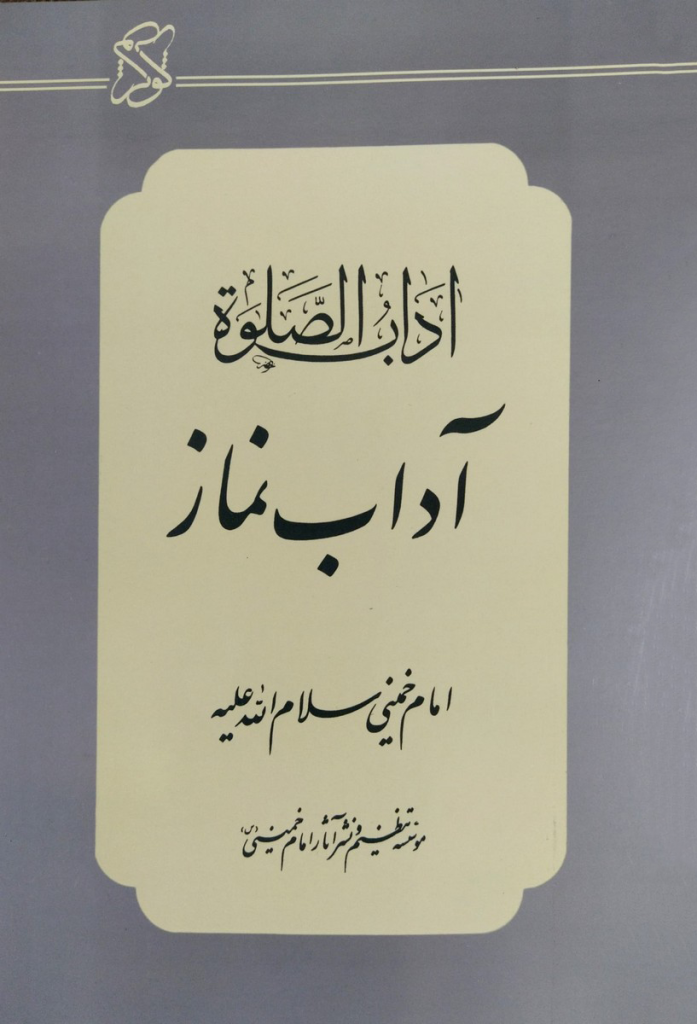
Book: Ādāb al-Ṣalāh
Author: Imam Khomeini
Reviewed by: Morteza Karimi
Imam Khomeini, Ādāb al-Ṣalāh (The Disciplines of Prayer), 7th ed., 1 vol., Tehran: The Institute for Compilation and Publication of Imam Khomeini’s Works, 1378 SH / 1999, 426 pages.
Introduction
Ādāb al-Ṣalāh (The Disciplines of Prayer) is one of the most important spiritual and ethical works of Imam Khomeini (1902–1989), the prominent jurist, philosopher, mystic, and political leader of contemporary Shiʿi Islam. The edition under review is the seventh printing, published in Tehran by the Institute for Compilation and Publication of Imam Khomeini’s Works in 1378 SH / 1999, in one volume. The work was originally completed on Saturday, 2 Rabīʿ al-Awwal 1361 AH (19 April 1942), and it represents a mature exposition of the inward etiquette, spiritual disciplines, and metaphysical secrets of ritual prayer.
The significance of Ādāb al-Ṣalāh becomes clearer when placed beside Imam Khomeini’s earlier work Sirr al-Ṣalāh (The Mystery of Prayer), written approximately three years earlier. In that earlier book, similar themes were presented briefly and in a highly condensed language suited to the spiritual elite and those versed in theoretical mysticism. By contrast, Ādāb al-Ṣalāh was written in a more accessible Persian prose so that a wider readership might benefit from the same essential teachings. This shift of style is itself important: it shows Imam Khomeini’s concern not merely with esoteric knowledge, but with spiritual pedagogy and ethical cultivation. Ādāb al-Ṣalāh has been translated into Arabic, Urdu, and English.
The book deserves attention because it stands at the intersection of Islamic mysticism, ethics, devotional practice, and Shiʿi spirituality. It is not a legal manual on the outward rulings of prayer, although it presupposes the importance of fiqh (jurisprudence); rather, it is a guide to the “inner disciplines of the heart”—without which prayer risks becoming a hollow performance. It also offers an important window into Imam Khomeini’s intellectual personality beyond politics: here we encounter him as a spiritual teacher deeply rooted in ʿirfān (Islamic mysticism) and Qurʾanic ethics.
Summary and Content Overview
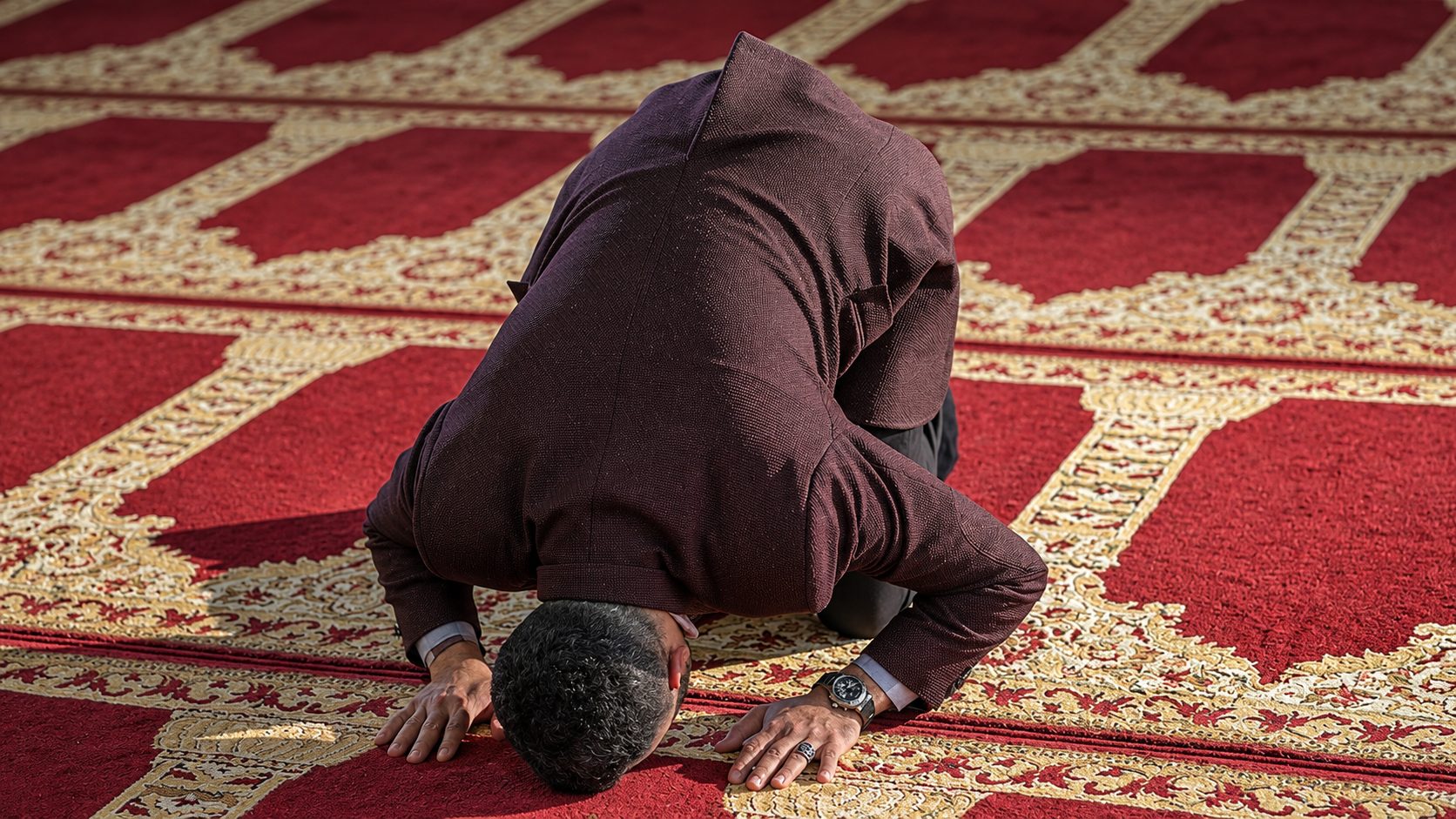
The central aim of Ādāb al-Ṣalāh is to explain the inner meanings, moral disciplines, and spiritual states required for the proper performance of prayer. Imam Khomeini treats prayer not merely as a formal obligation but as a journey of ascent, an instrument of self-purification, and a school for transforming the soul. The book therefore belongs to the classical Islamic tradition that distinguishes between the outer form of worship and its inward reality. If the external form of prayer is composed of standing, bowing, prostration, recitation, and ritual purity, its inward truth consists of humility, awareness, sincerity, recollection, attentiveness, and the annihilation of egotism before divine majesty.
Structurally, the book is highly elaborate. It consists of a preface, three major discourses, and a conclusion. The first discourse contains twelve chapters and a concluding section. The second discourse is organized into five chapters, with further subdivisions. The third discourse contains eight chapters, many of which are themselves divided into multiple subdivisions. The final conclusion contains three chapters, followed by a final closing prayer. This intricate architecture reflects both the depth of the topic and the author’s methodical approach to the various dimensions of ritual prayer.
The first discourse focuses primarily on the inward etiquette of worship in general and prayer in particular. It opens with one of the foundational themes of the entire work: the servant’s awareness of the majesty of Lordship and the humility of servanthood. According to Imam Khomeini, the spiritual progress of the wayfarer on the path to the Hereafter depends in large measure on the strength of this awareness. The more the human being remains trapped in selfhood, egoity, and self-centeredness, the farther he is from genuine humanity and nearness to God. In this sense, prayer is a means of disciplining and diminishing the ego.
He then discusses the stages of spiritual realization. Among these are the level of intellectual knowledge, the station of faith in realities, the station of tranquility and assurance of the soul, and finally the station of witnessing, which he describes as a divine light and merciful theophany. This gradated analysis shows how Imam Khomeini understands worship in developmental terms: the worshipper is not fixed in one spiritual condition but can progress from conceptual awareness to existential certainty and finally to a degree of contemplative vision.
A major portion of the first discourse is devoted to qualities such as khushūʿ (reverential humility), ṭumaʾnīna (inner stillness and composure), protection of worship from satanic interference, spiritual joy and liveliness in worship, and above all ḥuḍūr al-qalb (presence of heart). Imam Khomeini treats presence of heart as the animating soul of worship and even as the key to all spiritual perfection. Without it, ritual acts may remain outwardly valid but inwardly barren. He cites prophetic traditions, including the well-known report: “Worship God as though you see Him, and if you do not see Him, He sees you.” Here prayer becomes an exercise in consciousness, vigilance, and existential sincerity.
Particularly striking is his discussion of the restlessness of imagination and the distracted mind. He insists that human faculties can be trained through disciplined exercise. Just as bodily capacities can be cultivated, so too attention can be refined. The root cause of distraction, however, is not merely psychological weakness; it is often love of the world. Whatever the heart loves becomes its qibla—its direction of orientation. Thus, scattered thought in prayer reveals a deeper moral problem: the attachment of the heart to worldly concerns rather than to God.
The second discourse turns to the preliminaries of prayer, but always from an inward perspective. This section does not aim to replace juridical discussions found in works of fiqh; Imam Khomeini explicitly acknowledges that the outward rules have already been explained by the jurists. Instead, he examines the bāṭin—the inward dimension—of purification. External ṭahāra (ritual cleanliness) symbolizes and should lead toward internal purification of the soul.
The discussion of purity and the levels of purification is especially important. The human being, as long as he dwells in the material world, remains subject to competing influences: the armies of divine mercy and the armies of Satan. When explaining water as the principal means of purification, Imam Khomeini moves immediately to symbolic reflection: just as water is clear, subtle, and life-giving, so the servant’s relation to God in acts of obedience should be marked by purity and transparency. The legal act of washing becomes a moral and contemplative exercise.
Similarly, in the section on wuḍūʾ (minor ablution), he argues that washing the outward limbs is the “shadow” of the purification of the heart and spirit. The one who remains confined to physical purification alone has not yet entered the path of spiritual wayfaring. In the chapter on ghusl (major ablution), he interprets bodily cleansing as a reminder of deeper purification from inward impurity, especially from the domination of bestial and merely animal qualities over the truly human and merciful aspects of the soul. He also discusses the removal of filth and impurity in terms of freeing oneself from corrupt imaginings and obstacles that hinder ascent toward God.
The second discourse also includes a section on clothing, first regarding clothing in general and then specifically the clothing of the worshipper. Again, Imam Khomeini’s concern is not limited to jurisprudential validity. He asks what kind of inward awareness, humility, and symbolic self-understanding should accompany the simple act of standing before God in one’s garments.
The discourse extends beyond purity and clothing to discuss the place, time, and direction of prayer. In the section on the worshipper’s place, Imam Khomeini explains the spiritual etiquette appropriate to the different levels of human existence, from the natural and bodily realm to the inner faculties of the soul and the hidden domain of the heart. He also treats the permissibility of the place of prayer as a matter of inward vigilance, protecting the worshipper from satanic interference. In the discussion of time, he presents the prayer time as the awaited moment of intimate conversation with Absolute Perfection, emphasizing that one’s care for prayer time corresponds to one’s degree of knowledge of the sacred station of Lordship. Finally, in the section on facing the qibla, he interprets turning toward the Kaʿba and away from all other directions as a means of awakening the primordial nature (fiṭra) and reminding the heart that everything other than the manifestation of God is transient and perishing.
The third discourse examines the accompaniments of prayer (muqāranāt al-ṣalāh) in eight chapters. Imam Khomeini begins with the adhān and iqāma, interpreting them not merely as ritual formulas but as spiritual summonses: the adhān calls the human faculties to the divine presence, while the iqāma establishes them before God. He explains the inner meanings of the opening takbīrs, the testimony to divine unity, and phrases such as ḥayya ʿalā al-ṣalāh (hasten towards prayer). He also distinguishes several levels of shahāda—verbal, practical, heartfelt, and existential testimony.
The following chapters discuss the mystical meanings of standing (qiyām), intention (niyya), and Qurʾanic recitation. In the chapter on intention, Imam Khomeini emphasizes ikhlāṣ (sincerity) and its degrees, arguing that the worshipper must purify action from worldly motives, fear of punishment, desire for reward, and even attachment to spiritual pleasure. The chapter on recitation includes interpretations of Sūrat al-Fātiḥa, Sūrat al-Tawḥīd, and Sūrat al-Qadr, along with reflections on the etiquette of reading the Qurʾan in prayer.
The final chapters treat the secrets of bowing (rukūʿ), prostration (sujūd), tashahhud, and salām. Rukūʿ is linked to the unity of divine attributes, while sujūd points to the unity of the divine essence and the annihilation of the self before God. In the conclusion, Imam Khomeini discusses the Tasbīḥāt al-Arbaʿa, the secret of qunūt as detachment from all other than God, and the significance of the Tasbīḥ of Lady Fāṭima. Throughout this discourse, prayer appears as a complete path of inner transformation rather than a merely formal ritual.
Critical Evaluation and Significance
 The primary audience of Ādāb al-Ṣalāh includes scholars and students of Islamic studies, especially those working on Shiʿi spirituality, Islamic ethics, ʿirfān, and devotional literature. It is also highly valuable for seminarians, preachers, and serious religious readers who seek to move beyond the legal minimum of prayer toward its transformative inward dimension.
Its significance in Islamic studies is substantial. The work is an important modern example of the long Islamic tradition of writing on the inner meaning of ritual worship. In the Shiʿi context, it stands out because it unites jurisprudential awareness, ḥadīth-based piety, and mystical psychology in a single sustained treatment of prayer. It therefore helps scholars understand how twentieth-century Twelver Shiʿism could integrate law, ethics, and mysticism without collapsing one into the other.
Among the book’s most notable strengths are its depth of spiritual insight, its disciplined internal structure, and its ability to connect ritual details with larger theological and anthropological questions. Imam Khomeini does not reduce prayer to emotional experience; nor does he reduce it to formal correctness. Instead, he presents it as a comprehensive act of human reorientation. Another strength is his penetrating analysis of distraction, egoism, and attachment to the world—problems that remain strikingly relevant to modern readers.
Conclusion and Recommendation
In conclusion, Ādāb al-Ṣalāh is a major work of Islamic spiritual literature and one of Imam Khomeini’s most valuable contributions to the inner study of worship. By exploring inner disciplines of the heart, the stages of spiritual awareness, the symbolism of purification, and the theological meanings embedded in the acts and recitations of prayer, the book transforms ṣalāh from a formal obligation into a path of moral and spiritual ascent.
I strongly recommend this work to professors and researchers of Islamic studies, graduate students working on Shiʿi thought and Islamic mysticism, seminarians interested in the ethics of worship, and serious readers seeking a deeper understanding of prayer. It is especially suitable for those who wish to study how ritual practice can be interpreted through the lenses of spirituality, metaphysics, and self-purification. For anyone concerned with the lived, inward reality of Islam, Ādāb al-Ṣalāh remains an indispensable text.
