Āyatullāh Muḥammadī Riyshahrī, Dānishnāmih-yi Aḥādīth-i Pizishkī (Encyclopedia of Medical Narrations), 6tht ed., 2 vols., translated by Ḥusayn Ṣābirī, Qom: Dār al-Ḥadīth Publications, 1385 SH (2006 CE), 672 pp.
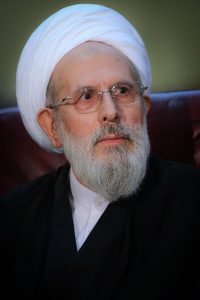 The Dānishnāmih-yi Aḥādīth-i Pizishkī (Encyclopedia of Medical Narrations) is a monumental compilation of ḥadīths (narrations) from the Prophet Muḥammad (s) and the Ahl al-Bayt (a) concerning various aspects of medicine and healing. The work was conceptualized and led by the late Āyatullāh Muḥammad Muḥammadī Riyshahrī, and published by Dār al-Ḥadīth in Qom, Iran. With contributions from leading researchers such as Aḥmad Saʿādatfar, Rasūl Ofuqī, Muḥammad-Taqī Subḥānī-Niyā, and Mortiḍā Khush-Naṣīb, the encyclopedia is one of the most extensive works in the field of narrative-based medicine rooted in Islamic tradition.
This encyclopedia is more than just a compendium—it is an effort to bridge traditional Islamic medical wisdom with modern scientific inquiry. It approaches medical narrations critically, with a focus on their authenticity and relevance, while preserving the spiritual and cultural value embedded within them.
Muḥammad Muḥammadī Nīk, widely known as Āyatollāh Riyshahrī (1946–2022), was a prominent Shīʿī scholar, ḥadīth expert, and a leading religious authority in post-revolutionary Iran. He held numerous important positions including the Custodian of the Shrine of ʿAbd al-ʿAẓīm al-Ḥasanī, representative of Tehran in the Assembly of Experts, and the head of Iranian pilgrims to Ḥajj. He was also the founder and president of the University of the Qurʾān and Ḥadīth. Āyatollāh Riyshahrī’s intellectual legacy is most vividly captured in his encyclopedic and ḥadīth-based works, such as Mīzān al-Ḥikma, and the comprehensive encyclopedias of Imām ʿAlī (a), Imām Ḥusayn (a), and Imām Mahdī (a).
The central premise of this encyclopedia lies in the evaluation and compilation of ḥadīths related to medicine, healing, diet, illness, and human physiology from both Shīʿī and Sunnī sources. The compiler emphasizes that weak chains of transmission (sanad) do not necessarily disqualify a ḥadīth from being useful or true. Given the historical potential for fabrication (jaʿl) in medical narrations, Āyatullāh Riyshahrī and his team have aimed to “purify” these traditions by selecting the most reliable versions available.
Āyatullāh Riyshahrī explicitly states that the motivation behind this project was to offer a curated body of knowledge—relevant not only to religious scholars but also to modern scientific researchers, especially in medical fields. The overarching goal was to preserve and evaluate the scientific heritage of the Ahl al-Bayt (a) for academic and practical use, offering new grounds for empirical testing, especially in the realms of preventive medicine and natural therapy.
The book is divided into five main sections, each further subdivided into thematic chapters, and organized in a methodical and systematic way.
Part I: The Islamic View of Medicine
This section, divided into three chapters, discusses the general philosophy of medicine in Islam, the ethics of medical practice, and general health advice. It explores how Islam regards the preservation of health as both a physical and spiritual responsibility.
Part II: Understanding Illness and Patient Care
Containing six chapters, this part reflects on the nature and wisdom behind sickness, the spiritual and physical benefits of illness, the duties of patients, the ethics of caregiving, and the importance of visiting the sick. The narrations in this section balance theological perspectives with compassionate care practices.

Part III: Human Anatomy and Physiology
One of the more technical parts of the work, this fourteen-chapter section deals with specific bodily organs and systems such as the heart, brain, nervous system, eyes, and ears. Ḥadīths about physical health and diseases linked to these systems are compiled and arranged based on the physiological structure of the body.
Part IV: Food, Drink, and Preventive Health
In nine chapters, this section explores themes in preventive medicine. Topics include the benefits of fasting, eating in moderation, food etiquettes, drinking habits, and the recommended number of meals per day. This part is especially relevant for general readers interested in dietary health from an Islamic perspective.
Part V: Healing with Food and Herbal Medicine
This is the largest and most detailed section, containing sixty chapters. It discusses various diseases and their treatments using foods and herbs. Entries are arranged alphabetically, and each item includes the therapeutic properties of the substance according to narrations. This section is particularly beneficial for researchers of traditional medicine, herbalists, and holistic health practitioners.
Each narration is vowelized for ease of pronunciation and understanding. Repetitive or duplicate narrations are generally omitted unless they offer unique wording or critical contextual differences. Extensive footnotes provide source verification, explanations of rare terms, and cross-references to major works.
Furthermore, the encyclopedia opens with a detailed table of contents and closes with a series of indexes—covering verses of the Qurʾān, narrators, tribes, sects, diseases, foodstuffs, compound medicines, places, and time references—making it a highly navigable academic resource.
 The Dānishnāmih-yi Aḥādīth-i Pizishkī stands out not just for its size but for the scholarly rigor it applies to a field often caught between myth and medicine. Its unique methodology—combining classical ḥadīth analysis with a physiological organization of content—is an innovation in religious-medical literature.
One of the book’s strongest points is its commitment to authenticity without dismissing weakly transmitted narrations outright. Āyatullāh Riyshahrī’s nuanced approach reflects a deep understanding of both ḥadīth sciences and the practical needs of contemporary medical researchers. The use of reliable sources, extensive citation systems, and careful organization increases its credibility and utility.
Moreover, by including narrations from both Shīʿī and Sunnī sources, the book offers a more ecumenical outlook on Islamic medical heritage. The categorization of narrations by topic rather than by source allows for thematic clarity, making it accessible even to non-specialists.
However, as with any work dealing with ancient medical knowledge, caution is required in interpreting these narrations through a modern lens. While some recommendations might align with contemporary findings (e.g., benefits of honey, moderation in eating), others require careful scientific validation.
Despite its scholarly achievements, the book is not meant to replace clinical medicine. It is a supplement—offering insights, hypotheses, and perhaps forgotten wisdom that can be tested and contextualized in the lab and clinic.
In conclusion, the Dānishnāmih-yi Aḥādīth-i Pizishkī is a pioneering reference that successfully bridges traditional Islamic scholarship with contemporary health sciences. It serves researchers, clinicians, ethicists, and lay readers alike, offering a well-organized, critically edited, and thematically rich account of medical narrations from Islam’s formative periods.
As interest in traditional medicine continues to grow, this encyclopedia has the potential to serve as a foundational text in the revival and reevaluation of prophetic medicine (al-ṭibb al-nabawī), not just as a religious curiosity but as a serious subject of interdisciplinary study.
