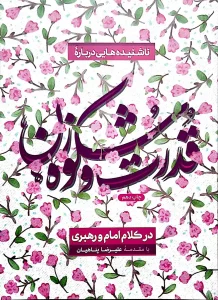
This book explores the sublime status of women and mothers in society through the perspectives of Imam Khomeini and Ayatollah Khamenei.
This book explores the sublime status of women and mothers in society through the perspectives of Imam Khomeini and Ayatollah Khamenei.

This book interprets Quranic verses to highlight the esteemed status of girls, emphasizing piety and modesty as divine paths to spiritual excellence.

This scholarly work by Ayatollah Sayyid Muhammad Baqir Hakim examines the life of Fatima al-Zahra as the central figure of the Ahl al-Bayt. It provides a historical analysis of her opposition to the Saqifa assembly and her defense of Imam Ali’s leadership to prevent the distortion of Islam.
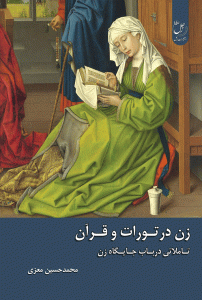
Mohammad Hossein Moezi provides a detailed report on the teachings of Islam and Judaism regarding women. The work contrasts the creation narratives of Eve, examines inheritance and divorce laws, and explores the tension between spiritual equality and distinct social roles.
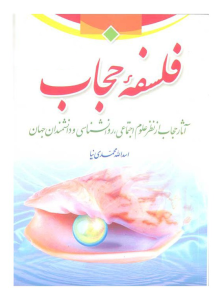
Ali Qanbari Barziyan and Ibrahim Rezaei examine the Social Philosophy of Hijab by bridging history and sociology. The work explores hijab’s evolution from ancient Persian modesty to modern ideological identity, offering a functionalist view of its role in social stability.
Mir Khandan analyzes the historical and legal dimensions of women’s attire, tracing it from ancient civilizations to Quranic legislation. The book distinguishes between ‘hijab’ and ‘covering,’ focusing on dignity and family stability.
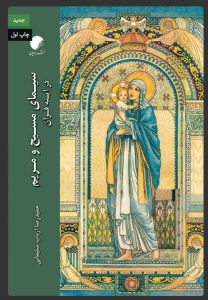
Hamid Reza Arbab Soleimani examines the high status of Jesus and Mary in the Quran to foster unity between Muslims and Christians. The work details Mary’s miraculous life, Jesus’s role as the Messiah, and the theological commonalities and differences between the Quran and the Gospels.
