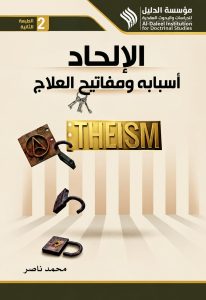
Book review: Atheism – Its Causes and Keys to Treatment by Muhammad Nasir analyzes New Atheism, quantum physics, and Islamic theology.
Book review: Atheism – Its Causes and Keys to Treatment by Muhammad Nasir analyzes New Atheism, quantum physics, and Islamic theology.

Book review: Reflections on the Philosophy of Islamic Philosophy examines epistemology and method in Islamic philosophy.

Book review: Atheism – Its Causes and Keys to Treatment by Muhammad Nasir analyzes New Atheism, quantum physics, and Islamic theology.

Imam Musa Sadr’s “Religion in Today’s World” explores how faith in the absolute can regulate a variable world. Adopting a “supra-religious” view, he argues that science and religion are twins, both essential for human progress and social solidarity.

This text reviews a scholarly book exploring the principle of rational moral judgment in Islamic theology. The authors examine how human reason can independently identify good and evil, comparing various theological schools. Ultimately, the work emphasizes this principle’s vital role in understanding divine justice and moral accountability.

This award-winning study explores the obscure transitional period of Imāmī intellectual history between the decline of the Kūfah school and the rise of the Baghdād school. Dr. Mūsavī Tanyānī tracks how theological legacies migrated and reconfigured across Baghdād, Baṣrah, and Khurāsān. The research reveals the regional dynamics and scholarly networks that eventually synthesized into systematic Shīʿī theology under Shaykh al-Mufīd.

This book explores the temporal origination of Divine Names through Shīʿī ḥadīth and semantic analysis to clarify the relationship between God’s Essence and Attributes.

This book traces the evolution of Divine Knowledge in Imāmī theology from the era of the Infallibles to the influential Kufa and Baghdad schools.

Tar Gul Ṣaf Ārā’s work provides a deep dive into the Philosophy of Human Creation, comparing the insights of Allamah Tabataba’i and Alusi. It explores evolution, divine grace, and the path to spiritual certainty through worship as defined in the Quran.

This work explores the Meaning of Life in the Quran by identifying three core components: purpose, value, and function. The author proposes “acquiring goodness” as a fundamental, universal characteristic of meaning that bridges supernaturalist and naturalist perspectives.
