Course Overview
Course Title: Jurisprudence of the Environment (Fiqh al-Bi’ah)
Instructor: Shaykh Ahmad Moballeghi
Schedule: Academic Year 2025/2026 | Saturday through Monday, 09:00 – 10:00
Location: Institute of Fiqh and Islamic Sciences, Shahid Sadoughi Seminary, Hazrat-e Abolfazl St., Shahid Sadoughi Blvd., Qom, Iran.
Course Portal: https://eitaa.com/feghhemohitezist
About the Course
In the contemporary era, environmental crises have emerged as one of the most significant threats to human existence. This course, delivered during the 2025–2026 academic year, explores the jurisprudential foundations for the protection of the environment based on Quranic verses and narrations, with a specific focus on the La Dharar (No Harm) narrations. The central objective of this academic inquiry is to examine the feasibility of extending and redefining the Islamic “Rule of No Harm” (La Dharar) within the framework of dynamic jurisprudence. The ultimate goal is to utilize these legal principles to prevent the destruction of natural resources, such as subterranean water reserves. The necessity of this course arises from the observation that traditional patterns of harm have evolved into large-scale catastrophes that seriously endanger the survival of life and future generations. Consequently, clarifying the religious prohibition of environmental destruction—based on concepts such as “Corruption on Earth” (Fasad fil-ardh)—has become an unavoidable imperative. The methodology employed in this research is inferential with a systematic generalization approach. This method involves analyzing the implied connotations of Islamic sources regarding the prohibition of the extinction of life, followed by adapting the “Rule of No Harm” to complex models of environmental damage to establish a comprehensive jurisprudential theory.
At the core of this course, the application of the La Dharar rule to complex types of environmental degradation is analyzed across four distinct levels. The first level addresses Individual Direct Harm, where pollution is clearly caused by a single individual or corporate entity; such cases are directly covered by the rule despite the specific environmental nature of the damage. The second level examines Cumulative Non-Active Harm, which refers to damage resulting from the aggregation of numerous minor actions, such as discarding plastic in nature. In these instances, the concept of “Dissolvable Responsibility” (Mas’ooliat-e Enhilali) is applied to attribute collective responsibility to the individuals who initiated the harm. The third level covers Cumulative Non-Critical Harms, involving cases where individual actions—such as vehicle exhaust emissions—are not critical in isolation but become catastrophic when combined. The rule is applied in this context because the individual act contributes to a major aggregated harm. Finally, the course addresses Escalating Cumulative Harm, the most severe form wherein cumulative actions cause nature to lose its self-regulating capacity, leading to self-perpetuating disasters like global warming. The religious prohibition of such actions is established through the rule of Tariq al-awla (priority reasoning).
Instructor Profile: Shaykh Ahmad Moballeghi
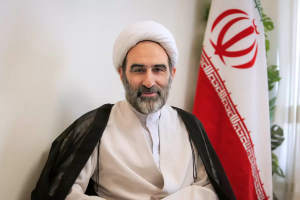 Shaykh Ahmad Moballeghi is a distinguished jurist and an international figure in the Qom Seminary. He completed his advanced studies in Islamic Jurisprudence under the mentorship of renowned Grand Ayatollahs, most notably Fazel Lankarani and Mirza Javad Tabrizi. His scholarly methodology is characterized by a distinctive focus on comparative jurisprudence and contemporary legal issues. Throughout his career, he has held several pivotal academic and administrative positions, serving as the President of the University of Islamic Denominations, the Founding President of the Islamic Research Center of the Islamic Parliament (Majlis), the President of the Research Institute of Islamic Sciences and Culture, and the Founder and Head of the Al-Tajdid Center for Comparative Religious Research in Lebanon.
Scholarly Contributions and International Engagement
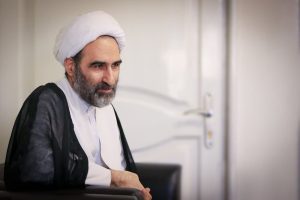 Shaykh Moballeghi’s scholarly work focuses on unifying Islamic legal narrations and addressing globalization. His most significant publications include Mawsu’at al-Ijma’ fi al-Fiqh al-Imamiyyah (Encyclopedia of Consensus in Imami Jurisprudence), a specialized multi-volume work on legal consensus, and Globalization and the Islamic World, a collective research effort on contemporary challenges. Furthermore, he is widely recognized for his contributions to interfaith dialogue and counter-extremism. His key international engagements include the Al-Azhar Conference in Cairo (2014), where he represented Iran and delivered a speech on “Respecting Diversity and Peaceful Coexistence,” advocating for a global document to reject Takfir (excommunication). He also served as a keynote speaker at the St. Petersburg Interfaith Forum (2016), discussing the role of “Divine Mercy” as a foundation for inter-religious communication. Additionally, he has chaired and participated in international conferences on counter-extremism involving joint academic efforts between Iranian and Iraqi universities.
