Key Details
| Course Title | Advanced Seminary Course in Contemporary Jurisprudence: The Jurisprudence of Artificial Intelligence · Original title: هوش مصنوعی |
| Instructor | Ayatollah Mohsen Araki |
| Language of Instruction | Persian |
| Base Text | Thematic (no base text) |
| Schedule | Tuesdays, 11 a.m.–noon Tehran time (UTC+3:30) |
| Started | October 28, 2025 (6 Aban 1404 SH) |
| Venue | Sayyid al-Shuhada Hall, Imam Husayn Mosque, Qom
Eram Street, Alley 20, first side street |
| Attendance | Seminary students at khārij level |
| Status | Completed; last session CONFIRM: January 27, 2026 (7 Bahman 1404 SH) or February 26, 2026 (7 Esfand 1404 SH) (as of October 5, 2026) |
| Archive & Official Website | Course archive, Research Institute for Contemporary Jurisprudence Studies (Persian; audio of sessions 1 and 3–8, PDF transcripts of sessions 1–2 and 5–8): https://edu.riicj.com/lessons/%d9%81%d9%82%d9%87-%d9%87%d9%88%d8%b4-%d9%85%d8%b5%d9%86%d9%88%d8%b9%db%8c-2/
Official website: https://mohsenaraki.ir |
| Information Checked | October 5, 2026 |
Overview
From October 2025, Ayatollah Mohsen Araki taught an Advanced Seminary Course (dars-i khārij) in Qom on artificial intelligence (AI) in Islamic jurisprudence (fiqh). The course was taught in Persian, in eight sessions held on Tuesdays. It examined whether the data and answers produced by AI can serve as valid evidence (ḥujja) for a jurist, both in establishing the facts to which a ruling applies and in discovering the ruling itself. These are new questions: AI did not exist when the classical works of fiqh were written.
About the Course
The Subject
Artificial intelligence is the name given to computer systems that perform tasks usually associated with human intelligence, such as understanding language, recognizing patterns, answering questions and making decisions. Many of these systems learn these abilities from very large amounts of data. AI is now used in many areas of life, including education, medicine, the economy, communications, the media, content production, public services and decision-making. Alongside its potential to raise productivity and widen access to knowledge and services, it brings new problems and risks: threats to privacy, the production and spread of false information, discrimination and algorithmic bias, and unclear responsibility for decisions based on AI. AI is therefore not only a tool; it touches many dimensions of human life.
The course does not examine all of these questions. As its Key Questions show, it focuses on the use of AI in the process of jurisprudential reasoning (tafaqquh) itself: can AI identify the subject (mawḍūʿ) to which a religious ruling applies, and can it derive a ruling from the evidence of the religious sources?
Why the Subject Needs a Jurisprudential Discussion
As AI enters more areas of life, believers and institutions ask which of its uses are permissible and under what conditions, and these questions need jurisprudential answers. AI can also be used within jurisprudential reasoning itself, for example to identify the subject of a ruling or to derive a ruling from the evidence, which raises the question whether its output can be relied on. Because AI did not exist in the past, earlier works of fiqh do not address these questions. Ayatollah Araki referred to both kinds of question at the start of the course, but the course itself addresses only the second: the use of AI in jurisprudential reasoning.
Place in the Tradition
To reach his conclusions, Ayatollah Araki draws on four discussions from the Principles of Jurisprudence (uṣūl al-fiqh) and from fiqh: the authority of evidence (ḥujjiyya); the establishment of the subject of a ruling (iḥrāz al-mawḍūʿ); the establishment of the ruling itself (iḥrāz al-ḥukm); and the obligation to search for the evidence (wujūb al-faḥṣ) before reaching a conclusion.
Method and Evidence
Ayatollah Araki first sets out each question and then asks whether fiqh already knows a comparable case, and how the shariʿa treats such cases. For example, he examines whether an answer given by AI can be treated like a report transmitted by a single narrator (khabar al-wāḥid) and, if so, whether the evidence for the authority of such reports extends to it.
Key Questions
- Should AI be examined in fiqh only as a matter for the individual believer, or also at the level of the social system as a whole?
- Is what AI says authoritative (ḥujja) in establishing the subject of a ruling, so that the ruling can be applied to it?
- Is the certainty (qaṭʿ) that a believer gains from AI data authoritative?
- Is a ruling discovered by AI authoritative?
Positions Discussed
In this course, Ayatollah Araki concluded that AI is limited to the data available to it. These data may be incomplete, and may miss relevant hadith found in unexpected chapters or phrased in different words. He also gave a more fundamental reason, drawn from theology and the Principles of Jurisprudence: authority (ḥujjiyya) is tied to responsibility. A jurist is answerable before God for his legal opinions, whereas AI, as a tool, bears no such responsibility. In his view, therefore, the final criterion is what the responsible user, the jurist himself, has established. AI can make the path to that point easier, but it cannot replace the jurist, who must reach certainty or confidence through his own knowledge and command of the sources.
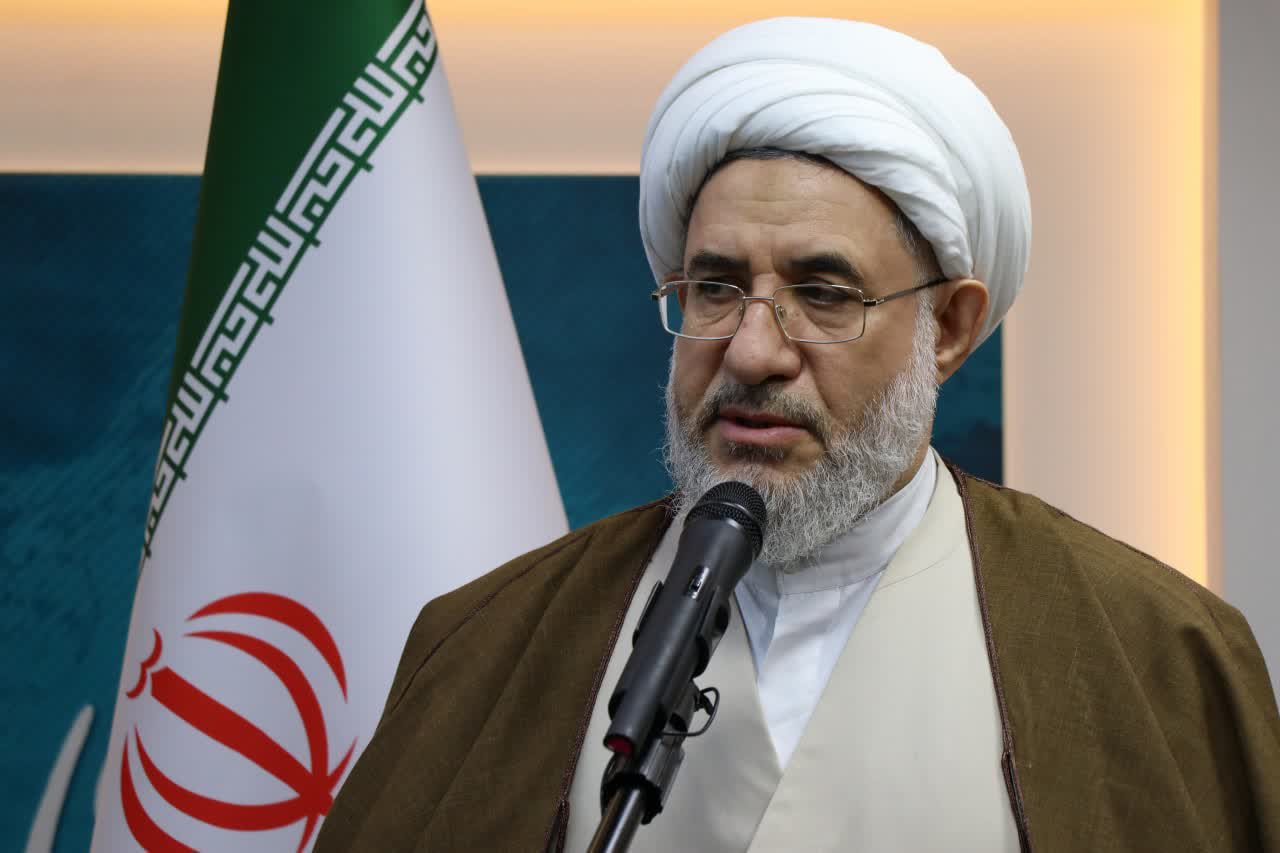
Ayatollah Mohsen Araki
Progress So Far
The course was completed in eight sessions, held between October 28, 2025 and CONFIRM: date of the last session.
| About Advanced Seminary Courses
The Advanced Seminary Course (dars-i khārij; baḥth al-khārij in Najaf) is the highest level of study in the Shiʿi seminaries (ḥawza). It follows the textual stage (suṭūḥ), in which students read and explain set textbooks. At the khārij level a qualified jurist (mujtahid) examines a single subject in depth, often over several years and in sessions held on most days of the week. For each question he examines the evidence from the accepted sources of Islamic jurisprudence, namely the Book (the Qurʾan), the Sunna (the words and practice of the Prophet and the Imams), reason (ʿaql) and consensus (ijmāʿ), together with the views of earlier scholars. He weighs their arguments and argues for his own conclusion by the method of ijtihād, the independent derivation of rulings from these sources. Some teachers take a classic work as the starting point of the discussion and examine the other major works and views alongside it. Students prepare for each session, review it with one another (mubāḥatha) and often write up the lectures as transcripts (taqrīrāt). The courses are usually taught in Persian in Iran and in Arabic in Iraq. |
About the Instructor
Ayatollah Mohsen Araki (Mohsen Mohammadi Araqi, known as Araki) was born in Najaf, Iraq, on CONFIRM: day and month of birth in 1334 SH, with the Gregorian and lunar Hijri (AH) dates. His father, Shaykh Habibollah Araki, taught at the seminary of Najaf.
He attended primary school at the Muntada al-Nashr school in Najaf and began his seminary studies in 1968–1969 (1347 SH). He studied the preliminary texts and the suṭūḥ with his father and other teachers in Najaf. After completing the suṭūḥ in 1974–1975 (1353 SH), he attended the Advanced Seminary Course in Jurisprudence of Grand Ayatollah Sayyid Abu al-Qasim al-Khoei and the Advanced Seminary Courses in Jurisprudence and in Principles of Jurisprudence of Ayatollah Sayyid Muhammad Baqir al-Sadr. In 1975–1976 (1354 SH) he moved to Qom. There he attended the Advanced Seminary Course in Jurisprudence of Ayatollah Mirza Kazem Tabrizi for four years, and the Advanced Seminary Courses in Jurisprudence and in Principles of Jurisprudence of Grand Ayatollah Hossein Vahid Khorasani and of Ayatollah Sayyid Kazem Haeri. In Qom he also studied philosophy: parts of al-Asfar al-Arbaʿa with Grand Ayatollah Abdollah Javadi Amoli and Ayatollah Morteza Motahhari, and Nihayat al-Hikma with Ayatollah Mohammad Taqi Mesbah Yazdi. In 2012 he received a PhD in philosophy from the University of Portsmouth, United Kingdom, with a thesis entitled Freedom and Causality in Contemporary Islamic & Western Philosophy.
Ayatollah Araki teaches Advanced Seminary Courses in Jurisprudence and in Principles of Jurisprudence at the seminary of Qom, as well as Qurʾanic exegesis and the hadith sciences (as of October 2026). He has taught at khārij level since CONFIRM: year. He is a member of the Supreme Council of the World Forum for Proximity of Islamic Schools of Thought (as of October 2026), and was the Forum’s Secretary-General from 2012 to 2019 (1391–1398 SH).
Selected Works
- Fiqh-i Nizam-i Banki (The Jurisprudence of the Banking System), Andisha-yi Nab-i Mandagar, 1402 SH (2023–2024).
- Usul-i Fiqh-i Nizam (The Principles of System Jurisprudence), Andisha-yi Nab-i Mandagar, 1402 SH (2023–2024).
- Fiqh-i Nizam-i Iqtisadi-yi Islam (The Jurisprudence of the Economic System of Islam), Majmaʿ al-Fikr al-Islami, 1400 SH (2021–2022).
- Fiqh-i Nizam-i Siyasi-yi Islam (The Jurisprudence of the Political System of Islam), Andisha-yi Nab-i Mandagar, 1393 SH (2014–2015).
- Fiqh-i Farhang (The Jurisprudence of Culture), Andisha-yi Nab-i Mandagar.
- Fiqh-i ʿUmran-i Shahri (The Jurisprudence of Urban Development), Andisha-yi Nab-i Mandagar, 1400 SH (2021–2022).
- Nazariyya-yi Shinakht (The Theory of Knowledge), Nashr-i Maʿarif, 1393 SH (2014–2015).
- Daramadi bar ʿIrfan-i Islami (An Introduction to Islamic Mysticism), Imam Khomeini Education and Research Institute, 1390 SH (2011–2012).
- Freedom and Causality in Contemporary Islamic & Western Philosophy, PhD thesis, University of Portsmouth, 2012.
This introduction was published by Tolou International Institute on CONFIRM: publication date, based on the instructor’s official sources as checked on October 5, 2026. Tolou does not organize or broadcast this course. Times, venues and topics may change, and seminary courses usually pause during holidays such as the summer break and the month of Ramadan; please confirm details through the official sources. Views presented in an Advanced Seminary Course are part of a scholarly discussion and are not necessarily the instructor’s formal legal opinion (fatwa).
