Course Overview
Instructor: Ayatollah Sayyid Mujtaba Nourmofidi Academic Year: 2022–2023 (1444 AH / 1401 SH) Schedule:Tuesdays and Wednesdays, 11:00 AM Location: Course Link 1: https://doroos.feqhemoaser.com Course Link 2:https://m-noormofidi.com/1401/07/18/فقه-رمز-ارزها/
About the Course
The emergence of cryptocurrencies has introduced one of the most significant contemporary issues (al-masāʾil al-mustaḥdatha) facing Islamic commercial jurisprudence. As blockchain technology and decentralized digital assets continue to reshape global financial systems, Muslim jurists are increasingly required to determine their legal status, economic nature, and Sharia rulings. This advanced course examines cryptocurrencies through the methodology of Imami ijtihad, providing a systematic jurisprudential analysis of one of the most influential developments in modern finance.
The course begins by establishing the conceptual foundations necessary for legal investigation. Recognizing that accurate legal deduction depends upon the precise identification of the legal subject (taḥqīq al-mawḍūʿ), it critically evaluates the terminology commonly used to describe cryptocurrencies, including electronic money, virtual money, digital currency, encrypted currency, and cryptocurrency itself. Rather than accepting these expressions uncritically, the course examines their conceptual strengths and shortcomings, arguing that legal terminology must accurately reflect the true nature of the phenomenon before any Sharia ruling can be derived.
A central theme of the course is the jurisprudential classification of cryptocurrencies and their underlying legal reality. The lectures explore whether these emerging digital entities should be regarded as money, commodities, or a broader category of financial assets. Particular attention is devoted to the concept of “Digital Assets” and “Cryptographically Secured Assets,” which are presented as more comprehensive descriptions capable of accommodating the diverse scholarly opinions regarding the nature of cryptocurrencies. This discussion demonstrates that identifying the legal subject (mawḍūʿ) is itself one of the most critical stages of Islamic legal reasoning and directly influences the derivation of the appropriate legal ruling (ḥukm sharʿī).
Building upon this conceptual framework, the course investigates the classical juristic understanding of money and its relevance to contemporary financial systems. Students examine competing theories concerning the nature of money, including whether its legal value lies in its nominal amount, intrinsic substance, or purchasing power. These discussions extend beyond cryptocurrencies to illuminate their implications for numerous areas of Islamic jurisprudence, including marriage contracts, dowries (mahr), debts, guarantees, loans, gifts, and commercial transactions. Through this analysis, the course demonstrates how developments in financial technology require a renewed examination of established legal concepts while remaining faithful to the principles of uṣūl al-fiqh.
The course also provides a comparative study of contemporary regulatory approaches adopted by various countries toward cryptocurrencies. By examining jurisdictions that recognize, restrict, prohibit, or cautiously regulate digital assets — including Japan, Germany, Egypt, Saudi Arabia, Pakistan, the United Kingdom, and Iran — students gain insight into the legal, economic, and public policy considerations surrounding decentralized financial systems. Particular emphasis is placed upon Iran’s evolving regulatory framework, highlighting the distinction between governmental restrictions on financial institutions and the conditional permissibility granted to private individuals and licensed mining activities.
Employing an inferential-comparative methodology, the course integrates classical Islamic jurisprudence with contemporary economic realities, demonstrating how the principles of ijtihad remain capable of addressing unprecedented technological developments. Subsequent lectures expand beyond introductory terminology to examine the opinions of Sunni and Shi’i jurists, their evidences, and the legal arguments advanced for both the permissibility and prohibition of cryptocurrency transactions. Throughout the course, students are trained to analyze emerging financial innovations through authentic juristic methodology, emphasizing precise conceptual analysis, legal classification, and disciplined deduction from the authoritative sources of Islamic law.
About the Instructor
Ayatollah Sayyid Mujtaba Nourmofidi is a distinguished Shi’i jurist and scholar of advanced Islamic jurisprudence (khārij al-fiqh), legal theory (uṣūl al-fiqh), and contemporary Islamic law. Born in Qom, Iran, in 1965 into a renowned family of religious scholars, he pursued his advanced seminary education under some of the most eminent marājiʿ of the contemporary Shi’i world, including Grand Ayatollah Mohammad Fazel Lankarani, Grand Ayatollah Wahid Khorasani, Grand Ayatollah Mirza Jawad Tabrizi, and Grand Ayatollah Shobeyri Zanjani. He also completed advanced studies in Islamic philosophy and Qur’anic exegesis under Ayatollah Abdullah Jawadi Amoli, combining traditional jurisprudential scholarship with broader intellectual training in philosophy and the Qur’anic sciences.
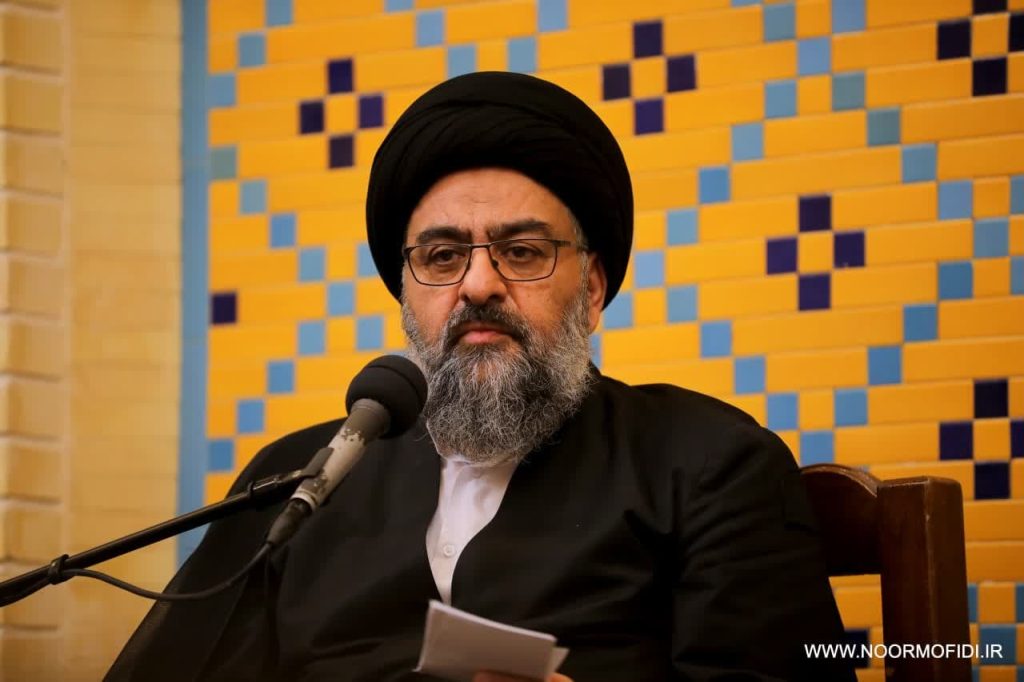
With more than three decades of teaching and research experience, Ayatollah Nourmofidi currently teaches Advanced Jurisprudence (khārij al-fiqh), Principles of Jurisprudence (uṣūl al-fiqh), Qur’anic Exegesis (Tafsir), and Legal Maxims (al-qawāʿid al-fiqhiyya) in the Qom Seminary. His scholarly interests focus particularly on al-masāʾil al-mustaḥdatha(contemporary legal issues), where he applies the methodology of Imami ijtihad to emerging questions in finance, medicine, technology, and social affairs. He is widely recognized for his methodical approach to identifying the legal subject (taḥqīq al-mawḍūʿ) before deriving the appropriate Sharia ruling, a methodological principle that characterizes both his teaching and his research.
Scholarly Contributions
 Ayatollah Nourmofidi has authored approximately thirty scholarly works in jurisprudence, legal theory, legal maxims, Qur’anic studies, ʿilm al-rijāl, and the teachings of the Ahl al-Bayt (peace be upon them). Among his most notable publications are Al-Ḥukm: Reality, Categories, and Scope (three volumes), Tanqih al-Sharia fi Sharh Tahrir al-Wasilah(Book of Khums, two volumes), The Legal Maxim of No Harm (La Darar), The Legal Maxim of Ilzam, The Legal Maxim of Taqiyya, A Jurisprudential Analysis of the Legitimacy of Mandatory Hijab, and numerous other specialized studies addressing both classical and contemporary questions of Islamic law.
In addition to his academic work, he serves as President of the Institute of Contemporary Fiqh, a leading research institution dedicated to the study of emerging jurisprudential issues. He is also a member of the Board of Trustees and Board of Directors of the A’immat al-Athar Fiqh Center and has held several educational and cultural leadership positions, including the chairmanship of the boards of prominent seminaries in Gorgan. Through his teaching, research, and institutional leadership, Ayatollah Nourmofidi has established himself as one of the leading contemporary scholars working to develop Islamic jurisprudence capable of addressing the legal challenges of the modern world while remaining firmly grounded in the principles of classical Imami legal methodology.
