DĪN DAR JAHĀN-E IMRŪZ [RELIGION IN TODAY’S WORLD]. By Imam Musa Sadr. Tehran, Iran: Imam Musa Sadr Cultural and Research Institute, 2024. Pp. 128. Paper. 1,750,000 IRR.
One of the most crucial issues that must be addressed today is the preservation of the rationale for religiosity amidst the transformations of the world and humanity. According to Imam Musa Sadr, religion regulates the relationship between human beings and their surrounding world. A central question arises: how can religion, which is rooted in the absolute and the constant, regulate this relationship alongside two transformable and variable phenomena (the world and humanity)? responding to common challenges faced by all religions and the diverse religious landscape of Lebanon, Imam Musa Sadr adopts a “supra-religious” perspective in this work. This outlook contributes to a rational understanding of the concept of religion, distinguishing his approach from that of many other scholars.
The book’s structure comprises several key sections, each addressing a specific aspect of religion’s relationship with the modern world.
In the first section, Sadr raises two issues: the current state of religion and the role of religion in the modern era. He views the current state of religion as a beautiful tableau that, unfortunately, emits no light within the heart of the practitioner. Faith, at best, has transformed into a tranquilizer for confronting suffering rather than a motivator to overcome it. In the realm of Sharia, religion has often become a mere inheritance—a superficial ornament of the devout. Failure to adhere to rules draws no fault, while observance is seen as ceremonial. In ethics, religion is treated as a spiritual perfection confined to the individual, lacking social encompassment. In summary, in modern civilization, religion plays a passive rather than a leading role; it is recognized as a constraint or, at best, a provision for the afterlife—a means to ease the transition into death.
To understand the true role of religion, one must look to its inception, where it relied on faith in the unseen (al-ghayb), faith in the absolute, and faith in God. One might assume that with the astonishing advancements in science and technology, the need for faith in the unseen has diminished; however, the opposite is true. Since all human achievements are evolutionary, they are inherently unstable and variable. As long as they are unstable, they cannot serve as an ultimate support or object of worship. Humanity requires something immutable to rely upon. This is the essence of the Quranic verse, “Verily, in the remembrance of God do hearts find rest” (13:28). Sadr posits that faith in the unseen provides hope for the future, enabling navigation through life’s storms. It connects humanity to God—the master of life and death—making generosity and sacrifice easier, as the believer views themselves as eternal.
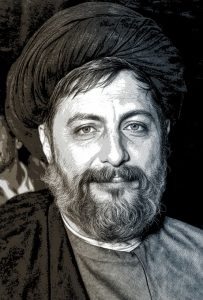 Sadr argues that preserving faith requires actions distinct from mere ritual—specifically, actions involving connection with people and the universe. He asserts that the calamities often blamed on religion today are actually the result of deceptions regarding religion’s manifestations, not religion itself. He argues that evolution and progress are simply human interactions with existence. He questions whether humanity’s condition regarding happiness is truly better today than in the past, despite modern civilization. He concludes that the correct implementation and a living interpretation of religious principles are the only ways to prevent modern corruption. This requires profound education and the formation of committees to establish communication between religions, particularly Islam and Christianity.
In the second section, the author addresses science and religion. Citing examples from creation—such as genetic development or celestial movements—he argues these indicate a wise Creator. Historically, religion has been a constant element across all tribes and nations, demonstrating that humans are inherently religious (fitrah). Sadr refutes the argument that religion was born of fear; one cannot gravitate toward the unknown out of fear. Therefore, humanity must have known the concept of religion before fearing nature. Science and religion are twins; neither is self-sufficient without the other. Science discovers the truth (God’s act), and as scientific knowledge increases, faith should inherently increase. While history saw periods where religious scholars oppressed science (e.g., the Middle Ages), followed by science “taking revenge” on its brother, Sadr asserts that the oppressors were the scholars, not the religion itself. Science shows the path, but religion provides the motivation to traverse it.
In the third section, Sadr discusses the service of religions to humanity. He views all divine religions as one, sharing a single goal: inviting towards God and serving humanity. Suffering began when religions turned inward to serve sectarian interests rather than their divine purpose.
In the fourth section, the author reflects on religious doctrines. He argues that humanity needs these doctrines because they provide a necessary framework based on the unseen and the absolute. He reiterates that while the religion of all prophets was one, the differences in commandments reflect the growth and evolution of humanity. Common principles—monotheism, resurrection, prophethood, prayer—unite them, while political machinations have divided them. The section concludes by emphasizing religion’s concern for the deprived and the role of the cleric. Sadr states that the essential role of a religious scholar is nothing less than human development, the cultivation of values, and the fostering of social solidarity.
Critique:
This work contains profound and effective insights for followers of divine religions. However, some critics might view the lack of a completely cohesive academic structure—stemming from its compilation of various speeches and articles—as a minor weakness. Additionally, certain philosophical discussions might benefit from further elaboration.
