Social Relations: Advanced Seminary Course (Dars-i Khārij) by Ayatollah Alireza Arafi
Key Details
| Course Title | Advanced Seminary Course in Contemporary Jurisprudence: Social Relations · Original title: درس خارج فقه معاصر: فقه روابط اجتماعی |
| Instructor | Ayatollah Alireza Arafi |
| Language of Instruction | Persian |
| Base Text | Thematic (no base text) |
| Current Topic | Injustice and justice (ẓulm and ʿadl), since January 2023; continuing in the 2026–2027 seminary year |
| Schedule | Tuesdays, 7–8 a.m. Tehran time (UTC+3:30), in the 2026–2027 seminary year |
| Started | September 26, 2018 (4 Mehr 1397 SH); current topic since January 10, 2023 (20 Dey 1401 SH); sessions of the 2026–2027 seminary year since September 15, 2026 (24 Shahrivar 1405 SH) |
| Venue | Nur Lecture Hall, under the Deputy for Education of the Qom Seminary, Qom |
| Attendance | Seminary students at khārij level |
| Status | Ongoing (as of September 29, 2026) |
| Archive & Official Website | Audio and text of the sessions, by seminary year (Ishraq va ʿIrfan Institute; Persian):
2018–2019 (1397–1398 SH): eshragh-erfan.ir · 2018–2019 2019–2020 (1398–1399 SH): eshragh-erfan.ir · 2019–2020 2020–2021 (1399–1400 SH): eshragh-erfan.ir · 2020–2021 2021–2022 (1400–1401 SH): eshragh-erfan.ir · 2021–2022 2022–2023 (1401–1402 SH): eshragh-erfan.ir · 2022–2023 2023–2024 (1402–1403 SH): eshragh-erfan.ir · 2023–2024 2024–2025 (1403–1404 SH): eshragh-erfan.ir · 2024–2025 2025–2026 (1404–1405 SH): eshragh-erfan.ir · 2025–2026 2026–2027 (1405–1406 SH): eshragh-erfan.ir · 2026–2027 Transcripts (taqrīrāt; Persian), Fiqahat School website (eshia.ir): https://www.eshia.ir/feqh/archive/text/arafi/feqh_ejtemaei/ Official website: https://arafi.ir |
| Information Checked | September 29, 2026 |
Overview
Since September 2018, Ayatollah Alireza Arafi has taught an Advanced Seminary Course (dars-i khārij) in Qom on the jurisprudence of social relations. The course is taught in Persian, in one session a week. It asks whether a person’s attitudes and conduct toward others, such as thinking ill of them, love and hatred, good manners, contempt, harm, bringing joy, injustice and justice, carry rulings in Islamic jurisprudence (fiqh), and if so, which rulings. Classical works of fiqh discuss these questions only briefly and in scattered places.
About the Course
The Subject
Social relations are the ways people treat one another: in the family, among relatives, at work, among friends and in society at large. Ethics, psychology and sociology each study these relations from their own angle, for example how our reading of other people’s intentions shapes the way we behave toward them. Islamic sources also address the mutual rights and duties of people, as in the Treatise on Rights (Risalat al-Huquq) attributed to Imam ʿAli ibn al-Husayn al-Sajjad (ʿa) and reported in works such as Tuhaf al-ʿUqul. The course examines a set of these relations as subjects of fiqh: good and bad opinion of others (ḥusn al-ẓann and sūʾ al-ẓann), love and hatred (ḥubb and bughḍ), good and bad conduct toward others (ḥusn al-khulq and sūʾ al-khulq), honoring and belittling others (ikrām and taḥqīr), harming others (īdhāʾ), bringing joy to others (idkhāl al-surūr), and injustice and justice (ẓulm and ʿadl).

Social relations
Why the Subject Needs a Jurisprudential Discussion
Most of these matters are usually treated as questions of ethics, that is, as virtues and vices. Yet the Qurʾan and the hadith speak of them in the language of command and prohibition. Verse 12 of Surat al-Hujurat (Qurʾan 49:12), for example, tells believers to avoid much suspicion, because some suspicion is a sin. Believers therefore face practical questions. Can an inner judgment be forbidden in itself? Which kinds of conduct toward others are obligatory or forbidden, and which are only commendable or disliked? Are these duties limited to relations with fellow believers? Classical works of fiqh discuss these questions only briefly, in different chapters, and have not examined them together as a single field.
Place in the Tradition
The jurisprudence of social relations has no chapter (bāb) of its own in fiqh; rulings on these subjects are scattered across many chapters. The course gathers them into a single field, one of the newer fields that apply jurisprudence to a particular area of life. Its main sources are Qurʾanic verses and hadith from collections such as Wasaʾil al-Shiʿa, read together with the views of earlier jurists on each subject.
Method and Evidence
For each subject, Ayatollah Arafi first defines the concept from its meaning in the Arabic language, in common usage (ʿurf) and in the religious texts. Where needed, he also draws on philosophical concepts and on related disciplines such as psychology, sociology and ethics to fix the concept and its limits. He then examines and classifies the Qurʾanic verses and hadith on the subject, reviews the views of other jurists, and finally states his own conclusion on the basis of this review.
Key Questions
- Are inner states, such as an opinion of another person or a feeling of love or hatred, themselves subject to legal rulings, or only the conduct that comes from them?
- Are good conduct, honoring others and bringing them joy only moral virtues, or can they be obligatory? Are belittling and harming others forbidden in themselves?
- Do these rulings concern only relations among believers, or relations with all human beings?
- Do intention, time, place and custom (ʿurf) affect these rulings?
- What is the criterion of injustice and justice, and how are the rights of people (ḥaqq al-nās) defined?
Progress So Far
As of September 2026, the course had completed six subjects and was continuing the seventh, injustice and justice:
- Good and bad opinion of others (from December 2018), starting from Qurʾan 49:12: whether voluntary and involuntary opinions differ in their ruling, and whether the prohibition covers only an unspoken judgment or also one put into words.
- Love and hatred toward others (from September 2019 through the 2020–2021 seminary year): whether involuntary love or hatred carries a ruling, and the ruling on love and hatred for the sake of God, toward believers and toward others.
- Good and bad conduct toward others (from February 2021): whether good conduct is limited to the instances named in the Qurʾan and the hadith or includes those recognized by custom, and whether time and place affect its ruling.
- Honoring and belittling others (from September 2021), starting from Qurʾan 17:70, “We have honored the children of Adam”: whether intention affects the ruling, and whether the ruling on belittling extends to children, the dead, groups and legal persons.
- Harming others (from May 2022): the definition and limits of harm, and whether its ruling differs for a believer, a non-believer and animals.
- Bringing joy to others (from November 2022), starting from a hadith of the Prophet (ṣ), reported in Wasaʾil al-Shiʿa, that counts bringing joy to believers among the deeds most loved by God: whether it is only a virtue or also carries a legal ruling, and whether it extends to non-believers, the dead and children.
- Injustice and justice (from January 2023; continuing in the 2026–2027 seminary year), drawing on Qurʾan 3:57 and 5:8: the meaning of justice in fiqh and how it differs from its customary sense, the source of rights, and the definition of the rights of people.
| About Advanced Seminary Courses
The Advanced Seminary Course (dars-i khārij; baḥth al-khārij in Najaf) is the highest level of study in the Shiʿi seminaries (ḥawza). It follows the textual stage (suṭūḥ), in which students read and explain set textbooks. At the khārij level a qualified jurist (mujtahid) examines a single subject in depth, often over several years and in sessions held on most days of the week. For each question he examines the evidence from the accepted sources of Islamic jurisprudence, namely the Book (the Qurʾan), the Sunna (the words and practice of the Prophet and the Imams), reason (ʿaql) and consensus (ijmāʿ), together with the views of earlier scholars. He weighs their arguments and argues for his own conclusion by the method of ijtihād, the independent derivation of rulings from these sources. Some teachers take a classic work as the starting point of the discussion and examine the other major works and views alongside it. Students prepare for each session, review it with one another (mubāḥatha) and often write up the lectures as transcripts (taqrīrāt). The courses are usually taught in Persian in Iran and in Arabic in Iraq. |
About the Instructor
Ayatollah Alireza Arafi was born in Meybod, Yazd Province, in 1959 (1338 SH). His father, Ayatollah Mohammad Ebrahim Arafi, was a religious scholar of Meybod.
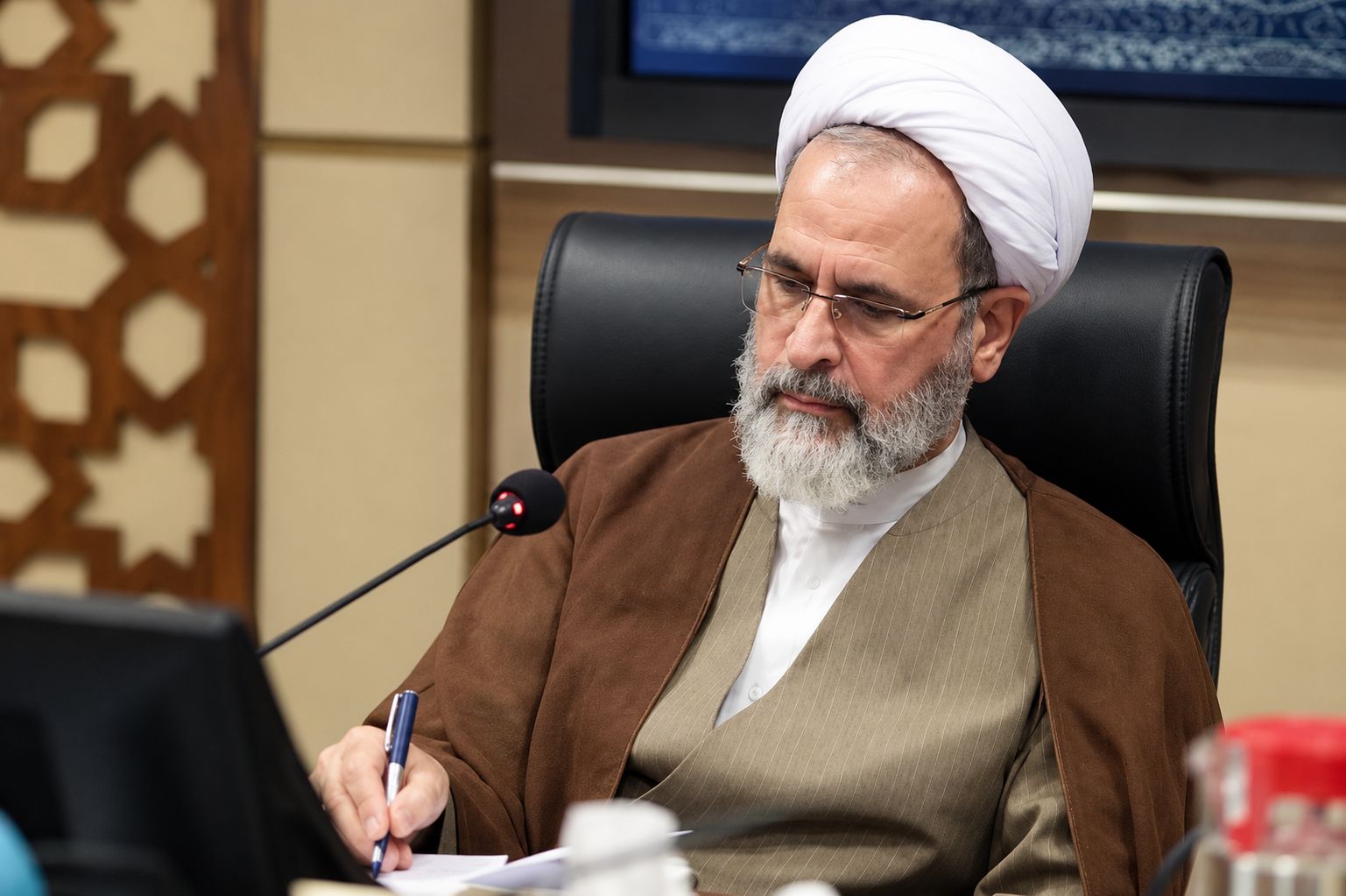
Ayatollah Alireza Arafi
After studying part of Arabic literature in Meybod, he moved to Qom in 1970–71 (1349 SH). There he completed his school education and, at the same time, began his seminary studies. After the preliminary and textual stages (muqaddimāt and suṭūḥ), he began attending Advanced Seminary Courses in 1977–78 (1356 SH). In jurisprudence and the principles of jurisprudence he studied with Grand Ayatollah Shaykh Morteza Haeri Yazdi, Grand Ayatollah Mohammad Fazel Lankarani, Grand Ayatollah Hossein Vahid Khorasani, Grand Ayatollah Mirza Javad Tabrizi, Grand Ayatollah Naser Makarem Shirazi and Grand Ayatollah Sayyid Musa Shubayri Zanjani. He studied Qurʾanic exegesis (tafsīr) with Ayatollah Ali Meshkini and astronomy (hayʾa) with Ayatollah Hasan Hasanzadeh Amoli, and read Falsafatuna and Iqtisaduna by Ayatollah Sayyid Muhammad Baqir al-Sadr with Ayatollah Sayyid Kazem Haeri. He studied al-Asfar al-Arbaʿa, the Demonstration (Burhan) of al-Shifaʾ, Fusus al-Hikam and Tamhid al-Qawaʿid with Grand Ayatollah Abdollah Javadi Amoli, read part of al-Asfar with Ayatollah Morteza Motahhari, and also studied philosophy with Ayatollah Mohammad Taqi Mesbah Yazdi. He learned Arabic and English and studied mathematics and Western philosophy.
He was president of Al-Mustafa International University from 2008 to 2018 (1387–1397 SH) and has been Director of the Seminaries of Iran since 2016 (1395 SH), as of September 2026.
Selected Works
- Barrasi-yi Fiqhi-yi Izaʾ va Idkhal-i Surur (A Jurisprudential Study of Harming Others and Bringing Joy to Others), Qom: Ishraq va ʿIrfan Institute, 2025–26 (1404 SH).
- Barrasi-yi Fiqhi-yi Suʾ-i Zann (A Jurisprudential Study of Thinking Ill of Others), Qom: Ishraq va ʿIrfan Institute, 2024–25 (1403 SH).
- Barrasi-yi Fiqhi-yi Husn-i Khulq va Suʾ-i Khulq (A Jurisprudential Study of Good and Bad Conduct), Qom: Ishraq va ʿIrfan Institute, 2024–25 (1403 SH).
- Tarbiyat-i Farzand ba Ruykard-i Fiqhi (Raising Children: A Jurisprudential Approach), Qom: Ishraq va ʿIrfan Institute, 2016–17 (1395 SH).
- Fiqh-i Tarbiyati (Educational Jurisprudence), Qom: Ishraq va ʿIrfan Institute, 2016–17 (1395 SH).
- Usul-i Ravabit-i Khanivadigi dar Islam (Principles of Family Relations in Islam), Qom: Ishraq va ʿIrfan Institute, 2020–21 (1399 SH).
This introduction was published by Tolou International Institute on Tue, 6 October, based on the instructor’s official sources as checked on September 29, 2026. Tolou does not organize or broadcast this course. Times, venues and topics may change, and seminary courses usually pause during holidays such as the summer break and the month of Ramadan; please confirm details through the official sources. Views presented in an Advanced Seminary Course are part of a scholarly discussion and are not necessarily the instructor’s formal legal opinion (fatwa).
